Join the authors of Forging the Framework on Thursday, April 16, at 4 pm. Presented by the National Guard Educational Foundation.
This special event will take place in the Montgomery Room at the National Guard Memorial, which is located at 1 Massachusetts Ave. NW Washington, DC 20001, and will be streamed online. This page will be updated with streaming information when it is available.
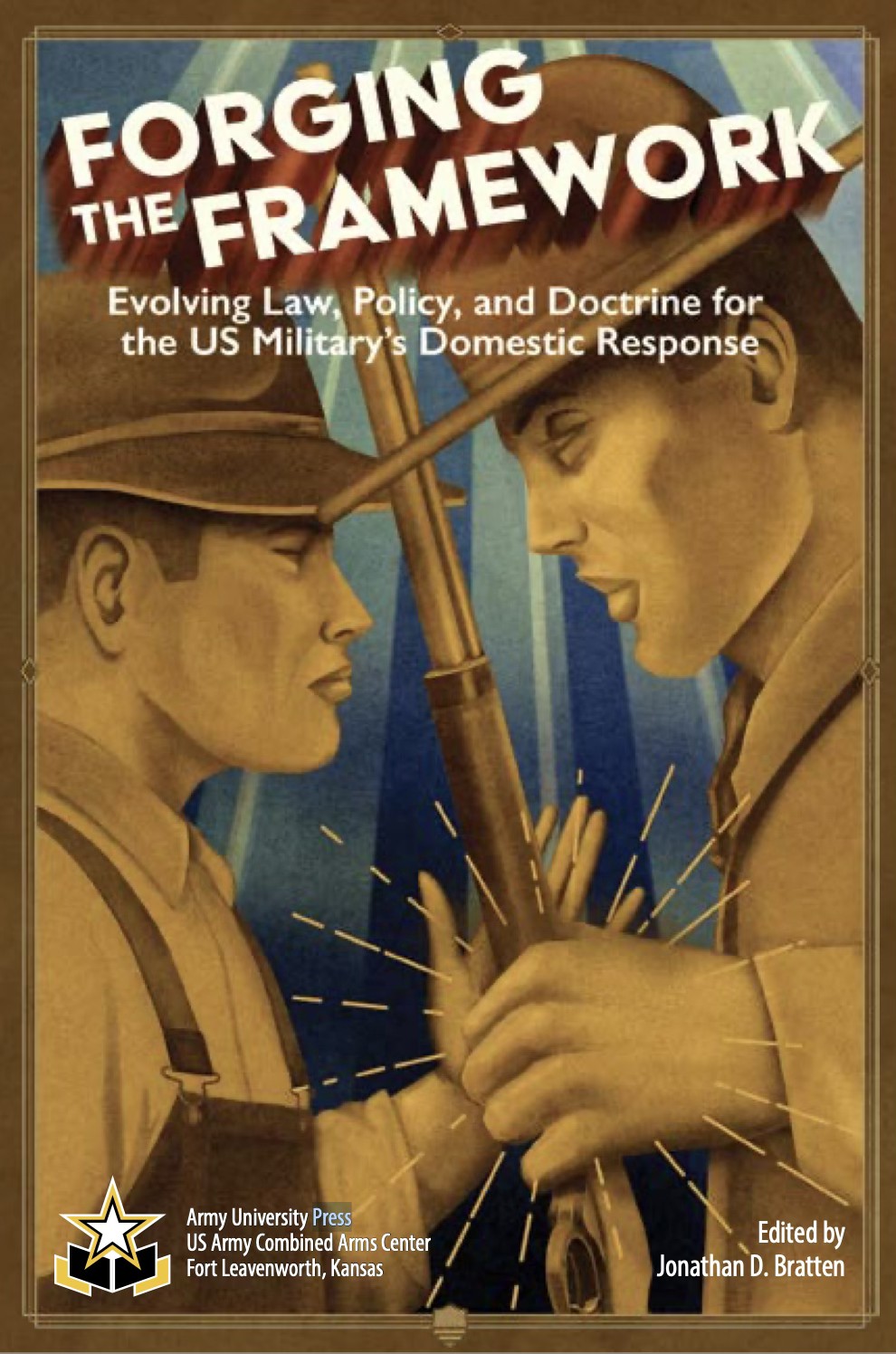
Forging the Framework explores the origins of the laws and doctrine that define the limits of Defense Support to Civil Authority. As the National Guard is mobilized domestically more and more, it is more relevant than ever to understand the events that shaped policy.
If you’re interested in attending, RSVP here:
If unable to attend in-person, you may watch the event online here:
About the Book:
The U.S. Army has robust doctrine for the mission of defense support to civil authority (DSCA). While it would appear that the Army always had a clear-cut system with defined chains of command and divisions of responsibility, along with established lines of funding at the state and federal levels, historical studies show that this has largely not been the case across the last 300 years. Indeed, until the twentieth century, the process of requesting, deploying, and utilizing US military forces to support civil authority was chaotic at best. At worst, it led to fatalities and abuse of authority. Events led to changes in law, interpretation of law, executive orders, new policies, and military doctrine and regulation changes, which changed the face of domestic military response. Army University Press’s edited anthology Forging the Framework addresses this issue, beginning in the colonial era and continuing through 2021. The speakers are contributing authors who engage themes of the book and discuss social, political, and economic factors contributing to changes over time. All the authors have personal experience in DSCA missions and bring a wealth of experience to the table.
About the Authors:
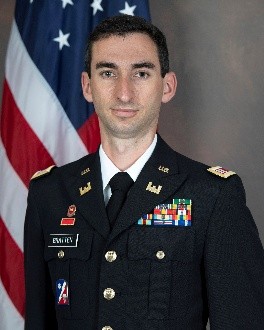
Maj. Jonathan D. Bratten is a National Guard officer and Afghanistan veteran. His book To the Last Man: A National Guard Regiment in the Great War, 1917–1919(Fort Leavenworth, KS: Combat Studies Institute, 2020) received the 2021 Army Historical Foundation award for best unit history. Bratten served as the Army Center of Military History’s first scholar-in-residence at the US Military Academy at West Point from 2021 to 2022 and as managing editor for the Center’s Revolutionary War monograph series from 2024 to 2025.
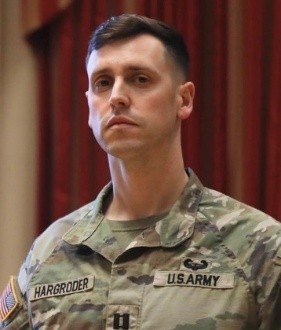
Cpt. Luke Hargroder is a historian and infantry officer in the Army National Guard. He received his PhD in history from Louisiana State University in 2022, and his dissertation was a finalist for the Society of Military History’s Edward M. Coffman Award. His research and current book, under contract with the University Press of Kansas, focuses on the U.S. Army in the American South before the Civil War.
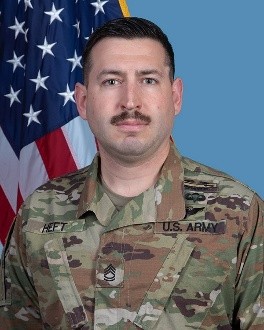
Sgt. 1st Class Aaron L. Heft serves as a historian for the US Army Center of Military History. He previously served on active duty as the senior noncommissioned officer for the Army National Guard’s Leader Development Program and spent fifteen years as an infantry noncommissioned officer in the Pennsylvania National Guard, where he deployed to Iraq. His academic work focuses on the National Guard’s role in World War I, and he has published in multiple journals in the United States and abroad.